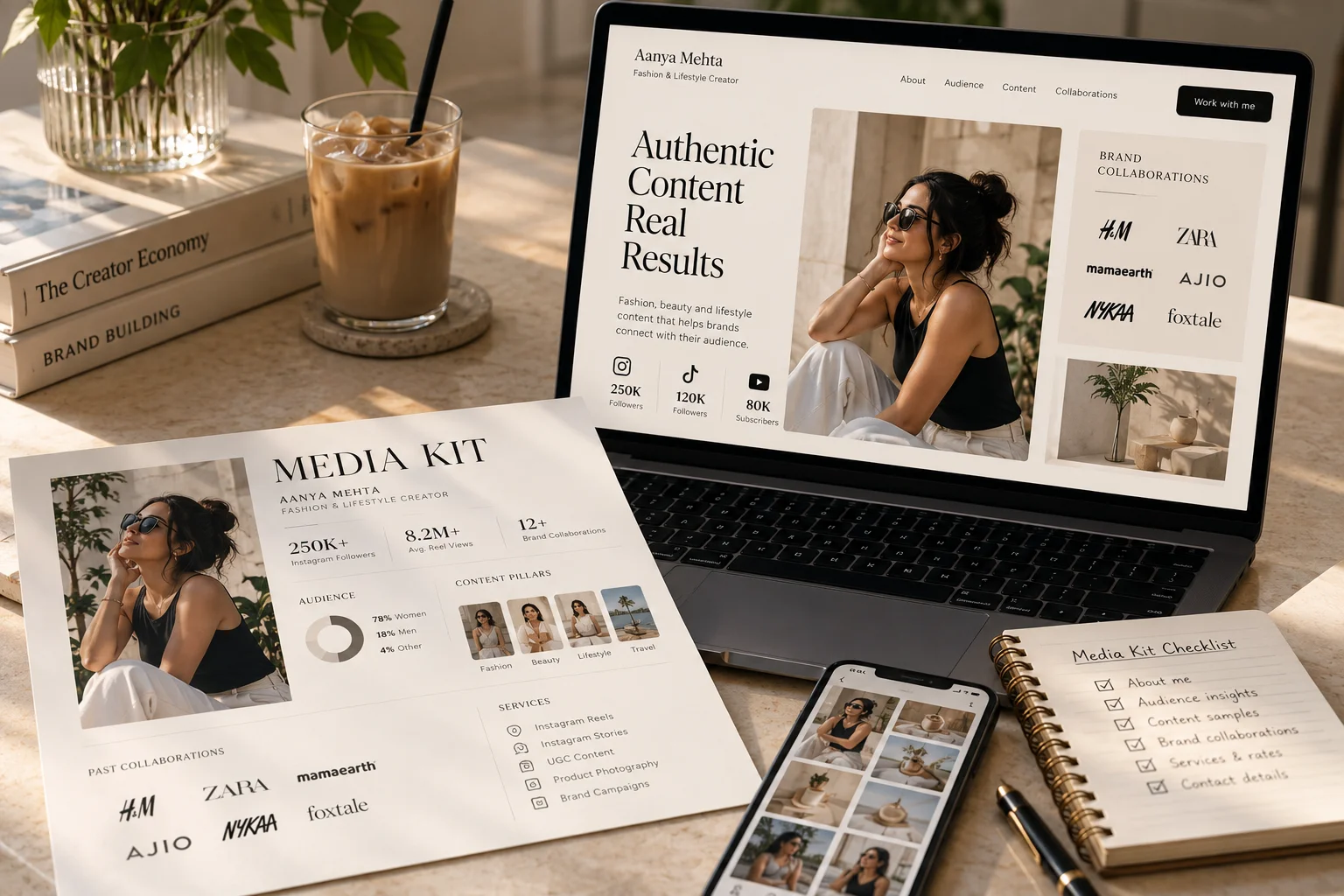
An influencer media kit is a professional snapshot of your creator business. It should quickly communicate your niche, audience, content quality, performance, previous collaborations, services and contact details. The goal is not to include everything about you — it is to give a brand enough useful information to decide whether to start a conversation.
What is an influencer media kit?
An influencer media kit is a document or online page that introduces a creator to potential brand partners.
Think of it as a professional introduction to your creator business. Instead of making a brand search through your Instagram profile, a media kit puts the most relevant information in one place.
A good media kit normally answers five questions:
- Who are you?
- What type of content do you create?
- Who is your audience?
- What results have your content or collaborations generated?
- How can a brand work with you?
What should an influencer media kit include?
You do not need a 15-page presentation. For most creators, a focused media kit with the right information is more useful than a long document.
How to create an influencer media kit
1. Start with a clear creator introduction
Your opening section should tell a brand who you are without making them read a paragraph of biography.
For example:
Meera Sharma — Beauty & Lifestyle Creator
Mumbai · 42K Instagram followers
I create practical beauty, skincare and lifestyle content for young Indian women, combining product education with relatable everyday storytelling.
Keep this section focused on the value you provide to a brand, rather than your entire personal history.
2. Explain your niche
Brands need to understand what kind of creator they are looking at.
Instead of writing: "I create content about everything I love," be specific.
Examples include:
- Beauty & skincare
- Fashion & styling
- Fitness & wellness
- Food & travel
- Finance & business
- Parenting & family
- UGC & product-focused content
3. Show audience information
Follower count tells only part of the story. Brands may also care about where your audience is located, relevant age groups, gender distribution and other audience characteristics.
Only include information that is useful for the type of collaborations you want.
4. Add meaningful performance metrics
Avoid turning your media kit into a dashboard full of numbers.
Choose metrics that help demonstrate content performance.
- Followers
- Average Reel views
- Average reach
- Engagement rate
- Saves
- Content views
If you have strong campaign results, those can be even more useful than generic account-level statistics.
5. Show your best content
Your media kit should show brands what they can expect from working with you.
Include a small selection of your strongest work rather than every piece of content you have ever published.
For each example, consider showing the content format and one or two relevant performance metrics.
6. Add relevant brand collaborations
Previous collaborations provide context about the kind of campaigns you have experience delivering.
Instead of simply listing: Brand A · Brand B · Brand C, add useful context.
Skincare Campaign
Created 2 Reels and 3 Stories focused on product education
and everyday skincare routines.
If you have measurable campaign results, include them where appropriate and where you can substantiate them.
7. Explain how brands can work with you
Make your available services obvious.
- Instagram Reels
- Instagram Stories
- UGC videos
- Product photography
- Event coverage
- Long-term creator partnerships
- Content licensing or usage rights
You can include starting prices if you want to make your commercial process more transparent. You can also keep pricing private and discuss it after understanding the campaign brief.
Influencer media kit template
Here is a simple structure you can copy when creating your own media kit.
Your Media Kit
- Your name + creator title
- Location
- Short creator introduction
- Your content niches
- Instagram handle
- Follower count
- Average views / reach
- Engagement rate
- Audience demographics
- Top content examples
- Previous brand collaborations
- Campaign results / case studies
- Available services
- Contact information
Common influencer media kit mistakes
Too much information
A media kit should make evaluation easier, not harder. Remove metrics that do not help a brand understand your audience, content or commercial value.
Only talking about follower count
A creator's value cannot be communicated through follower count alone. Content quality, audience relevance and campaign performance can provide important additional context.
Using outdated statistics
Keep important account statistics reasonably current. Outdated numbers can create confusion when they are significantly different from your current profile.
Making it difficult to contact you
The next step should be obvious. Include a professional email address or another appropriate business contact method.
Media kit vs creator portfolio: what's the difference?
A media kit and creator portfolio overlap, but they serve slightly different purposes.
Media kit: A compact professional snapshot containing your profile, audience, performance and commercial information.
Creator portfolio: A broader online presence where brands can explore your content, collaborations, case studies, services and results.
A media kit works well when you need to send a concise introduction. A portfolio can be useful when a brand wants to explore your work in more detail.
Your portfolio shouldn't live in a PDF.
ReelPortfolio gives creators one professional link for showcasing content, audience insights, collaborations, results and services.
Create your ReelPortfolio →Frequently asked questions
What is an influencer media kit?
An influencer media kit is a professional document or online page that introduces a creator to brands. It typically includes the creator's niche, audience, content examples, performance metrics, previous collaborations and contact information.
What should an influencer media kit include?
At minimum, include your creator introduction, niche, audience information, relevant performance metrics, content examples, previous collaborations, services and contact information.
Do small influencers need a media kit?
Yes. A media kit can help smaller creators communicate their niche, audience and content quality without relying entirely on follower count.
Should I include my Instagram rates?
You can, but you don't have to. Some creators publish starting rates while others discuss pricing after understanding the campaign deliverables, usage rights and timeline.
Is a media kit the same as a creator portfolio?
No. A media kit is generally a concise summary of your creator profile, audience and commercial information. A portfolio can provide a deeper view of your content, collaborations, case studies and results.